EVBOOST
Thursday 1 October 2026
EVBOOST: Clockwork and Optimems join forces to advance smart EV charging
Optimems and Clockwork Engineering are collaborating on EVBOOST - “Development and Pilot Installation of Hybrid Electric Vehicle Charging Stations”, a research project to develop and pilot an integrated smart electric vehicle charging solution. By bringing together their expertise in energy management, energy infrastructure and electric mobility, the two companies aim to make charging infrastructure more efficient, flexible and sustainable.
What is EVBOOST?
Fast EV charging requires substantial power, which the electricity grid cannot always supply at a given time. When several chargers operate at once, demand can rise sharply, creating power peaks/ spikes and increasing energy costs.
EVBOOST addresses this challenge by developing a hybrid EV charging station that coordinates a solar PV system, battery storage, the electricity grid, and AC and DC chargers. Its smart energy management system determines how to use solar generation, stored energy and grid power based on charging demand and the site’s operating constraints.
How will the EVBOOST solution work?
EVBOOST will coordinate energy generation, storage and consumption so that power from the solar PV system, battery and grid is used according to the EV charging needs of the site.
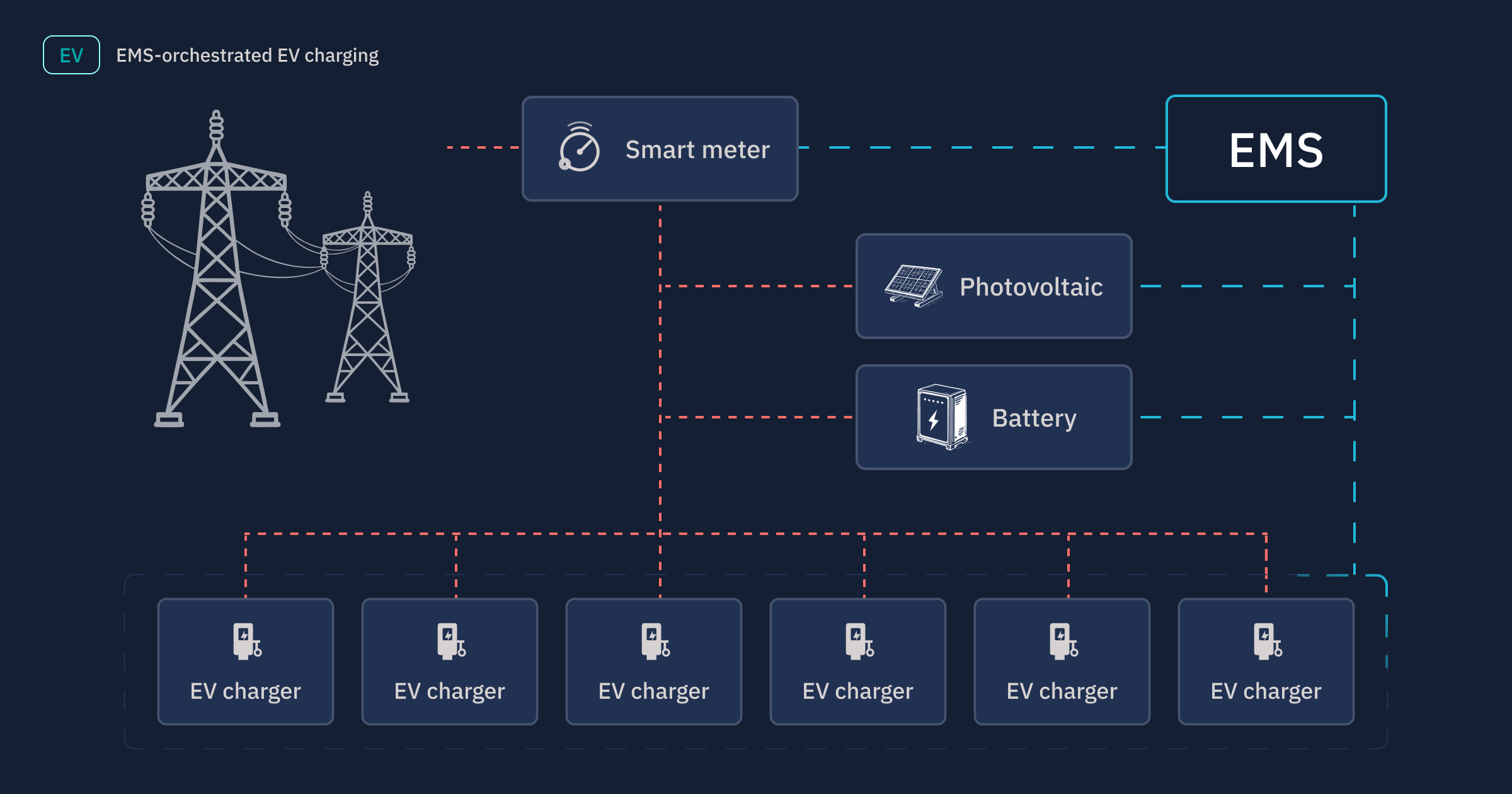
Generation, storage and charging in one integrated system
Electricity generated by the solar PV system can be used to charge vehicles directly or stored in the battery for later use. When solar generation is insufficient or charging demand increases, the battery and the electricity grid will work together to meet the site’s energy needs.
Smart energy management
The energy management system will monitor solar generation, energy consumption, the battery’s state of charge and EV charging demand. Using this information alongside forecasts of generation and demand, it will schedule vehicle charging and battery operation. This will help the station increase the utilization of renewable energy, reduce power peaks and shift consumption to periods when electricity costs less.
Connecting different systems and chargers
The solution will connect the EV chargers, solar PV system, battery and other energy equipment through a shared monitoring and control platform. Standard communication protocols will allow equipment from different manufacturers to work together and enable the solution to be adapted to different types of sites.
What are the objectives of EVBOOST?
The primary objective of EVBOOST is to enable the deployment of EV charging infrastructure at sites with limited grid capacity. The project aims to:
- Enable fast charging where the power available from the grid is limited.
- Reduce peak power demand and energy costs.
- Increase the use of electricity generated by on-site solar PV.
- Develop an interoperable and scalable solution capable of integrating chargers and energy equipment from different manufacturers.
What are the roles of Clockwork Engineering and Optimems?
The two companies bring complementary expertise to EVBOOST. Clockwork Engineering is primarily responsible for the physical infrastructure and pilot installation, while Optimems focuses on the energy management system and digital platform.
Clockwork Engineering’s contribution
As project coordinator, Clockwork Engineering helps define the requirements, use cases and overall system architecture. It designs the pilot installation and selects and integrates the solar PV system, batteries, and AC and DC chargers. It also leads the implementation and evaluation of the pilot, as well as the dissemination and exploitation of the project’s results.
Optimems’ contribution
Optimems is responsible for developing the EVBOOST Energy Management System (EMS) and digital platform. This includes forecasting tools for solar generation and demand, optimised charging schedules, and capabilities for dynamic pricing and demand response. Optimems also supports the integration of the system components, tests their interoperability and contributes to the initial validation of the solution through simulations.
EVBOOST and the “Research – Innovate” Action
EVBOOST – “Development and Pilot Installation of Hybrid Electric Vehicle Charging Stations” (application code ΕΚΠΑΡ01-0051999) is a 36-month project with a total approved budget of €799,995, of which €639,996 is public funding.
The project is implemented under the “Research – Innovate” Action of the “Competitiveness” Programme, NSRF 2021–2027, with co-funding from the European Union and national resources. The “Research - Innovate” Action is designated an Operation of Strategic Importance.
Frequently Asked Questions
What challenge does EVBOOST address?
EVBOOST aims to enable fast EV charging at sites where grid capacity is limited. It also seeks to reduce the peak power demand and energy costs that can result when several chargers operate at the same time.
How do solar PV and battery storage contribute?
Electricity generated by the solar PV system can be used to charge vehicles directly or stored in the battery for later use. This allows the station to make greater use of renewable energy and draw on stored power when charging demand exceeds the power available from the grid.
What is the role of the energy management system?
The Energy Management System (EMS) monitors solar generation, energy consumption, the battery’s state of charge and EV charging demand. It uses this information, together with forecasts, to schedule vehicle charging and battery operation.The Energy Management System (EMS) monitors solar generation, energy consumption, the battery’s state of charge and EV charging demand. It uses this information, together with forecasts, to schedule vehicle charging and battery operation.
Which types of chargers will the EVBOOST solution support?
The solution is being designed to support both AC and DC EV chargers. Standard communication protocols will also enable equipment from different manufacturers to be connected through a shared platform.